- Online only
- New
€52.73
€52.73Price
- Online only
- New
Your motorsport parts store.

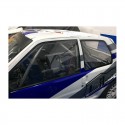
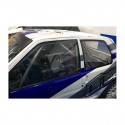
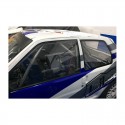
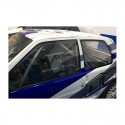
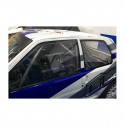
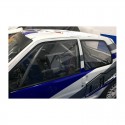
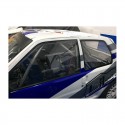
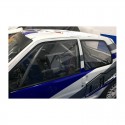
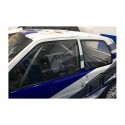
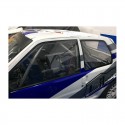
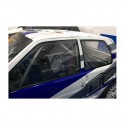
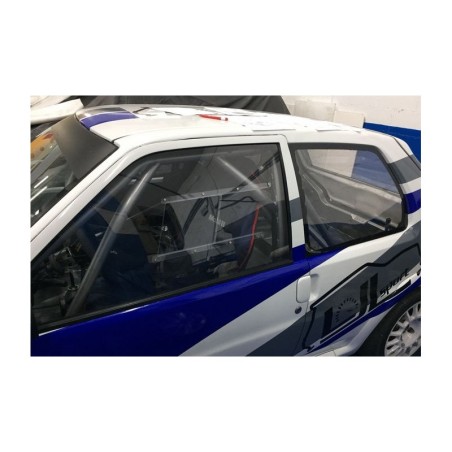
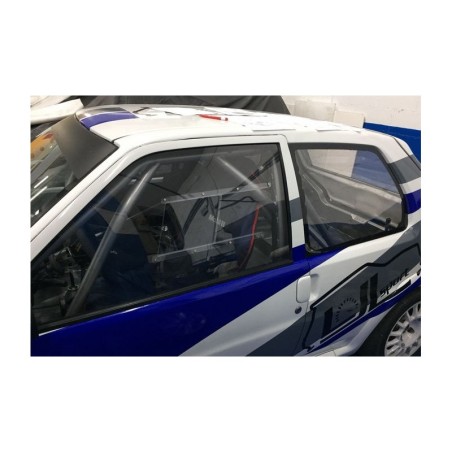
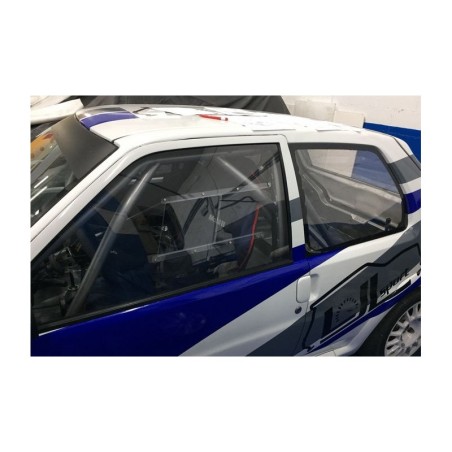
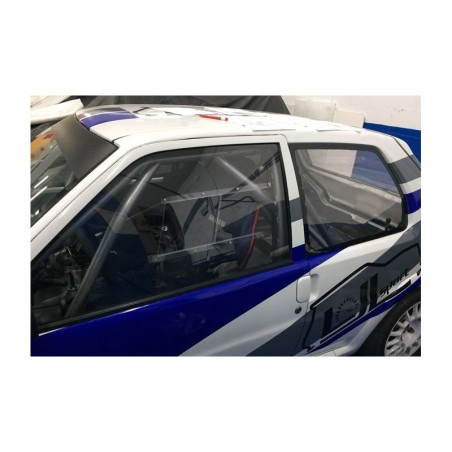
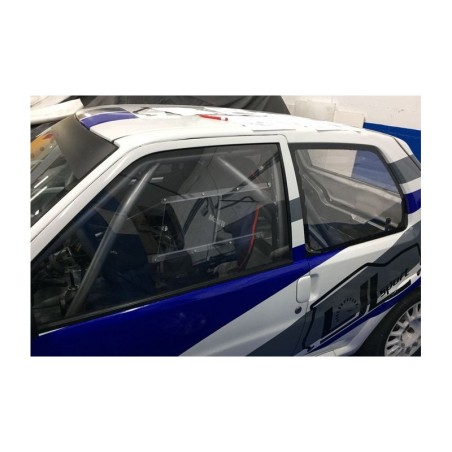
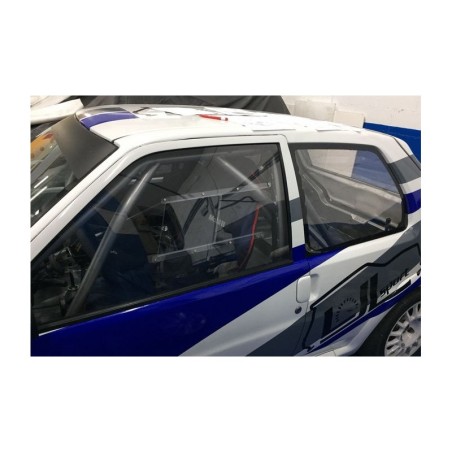
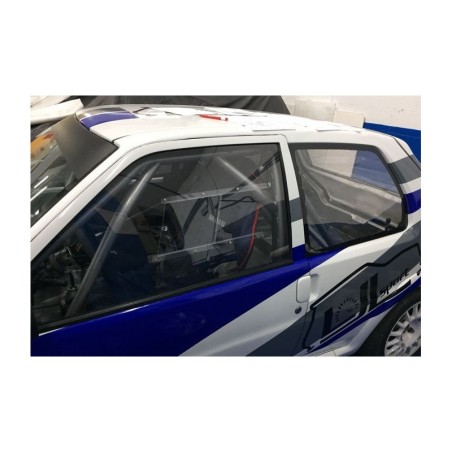
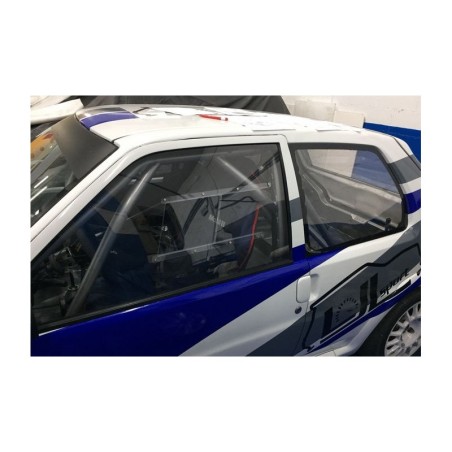
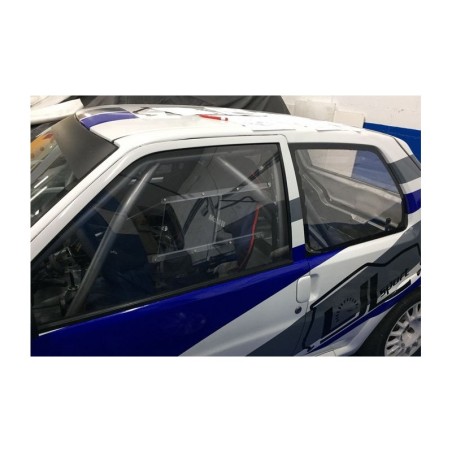
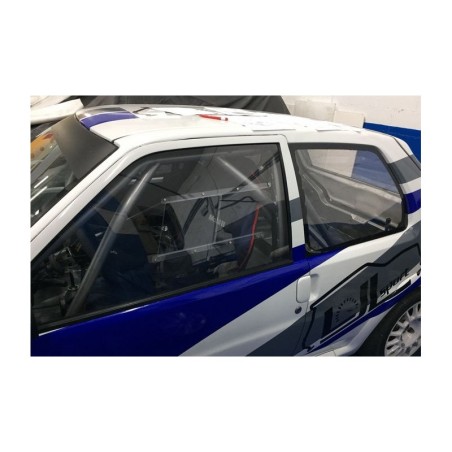
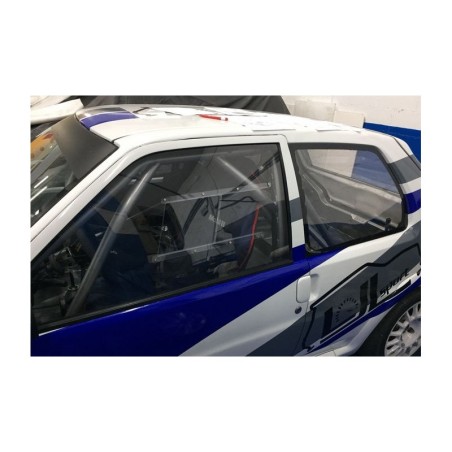
Replacing conventional glass with polycarbonate windows is one of the most effective ways to cut weight on a rally or competition car. Each glass side window weighs between 3 and 5 kg — switching to polycarbonate saves up to 70% of that weight. Changing four windows can take between 10 and 15 kg off the car, with a direct effect on handling and performance.
As well as saving weight, FIA polycarbonate windows remove the need to fit the anti-shatter film that the regulations require on conventional glass in competition — as polycarbonate itself is virtually unbreakable and does not shatter on impact.

|
Safety and strength
|
Optics and weight
|
FIA regulations: FIA-homologated polycarbonate windows replace glass directly and remove the need for anti-shatter film, saving time and money when preparing the car. Check the technical regulations for your class to confirm the permitted thickness and fixing specifications.
How much weight do you save by switching to polycarbonate?
It depends on the car and how many windows you replace. As a rough guide, a conventional glass side window weighs between 3 and 5 kg — the polycarbonate equivalent weighs between 0.8 and 1.5 kg. Replacing all four side windows can easily save between 8 and 14 kg, a very significant figure in motorsport where every kilo counts. The windscreen and rear window usually stay in laminated glass under the regulations.
Can polycarbonate windows be used on the road?
Not legally on public roads. Vehicle type-approval rules (ECE R43) require toughened or laminated glass on registered vehicles. Polycarbonate windows are designed exclusively for competition vehicles that are not driven on public roads, or for use in rally and circuit events where the regulations allow it. They will not pass a roadworthiness test.
Does polycarbonate also replace anti-shatter film?
Yes. Competition rules require anti-shatter film on glass windows to stop fragments flying if they break. Polycarbonate is virtually unbreakable and does not shatter like glass, so this requirement and the extra cost of the film disappear. Along with the weight saving, it is one of the most practical reasons to switch to polycarbonate.
Can polycarbonate windows be fitted in the same opening as the originals?
It depends on the model. Some polycarbonate windows are made to measure for specific models and fit straight into the original window opening, although they are usually fixed differently — with screws or brackets instead of the glass rubber seal. For less common models they may need to be adapted or cut to size. Check the product page or contact us with your car model to confirm fitment.
What polycarbonate thickness do I need — 3mm or 5mm?
By default the windows are supplied in 3mm thickness, the standard for tarmac and circuit competition. For gravel rallies you need 5mm, as the heavier impact from stones and grit calls for greater strength. If you are unsure which thickness your class or event requires, ask us before ordering and tell us your championship regulations.
Does polycarbonate scratch easily?
Polycarbonate is more prone to surface scratches than toughened glass, especially if it is cleaned with abrasive materials. To clean it properly, use water and a soft microfibre cloth — never rubber squeegees or solvent-based products. In motorsport this is a minor issue, as the windows have a limited life and are replaced regularly. Versions with an anti-scratch hard coating last longer.
150 products